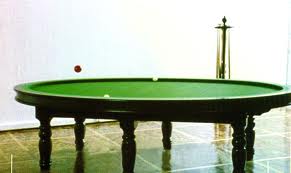
 Imagining the future need not be an extreme activity. Klebnikov's visions of the future include 'radio clubs' and 'radio auditoriums': not bad for 1920. Wodehouse observes that imagining a remote past is no different to preserving the world of Edwardian England. Consider Orozco's pool table or sliced Citroen or Munoz' lift in Double Bind. These objects are similar but at the same time extremely different.
Orozco claims to have no interest in the engineering used to make the sliced car; this is the irony of the artist; this is serious engineering but for unfathomable purposes; dedicated engineering effort to produce objects that are nearly normal yet occupy a remote parallel universe. What if these lifts, cars and tables proliferated and outnumbered so called utility objects?


.jpg)


