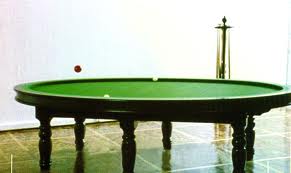
W Benjamin sees Odradek as the 'the commodity that survives to no purpose' and through whom 'surrealism may come to an end' mutating into kitsch which sustains itself on an outlived world of things. Surely the point about Odradek is that it does survive and persist-in attics, doorways and at the bottom of stairs in various houses. For Odradek to be a kitsch object it would have to had a earlier purpose or immediacy since lost or outlived. Kafka says: 'anything that dies has had some kind of aim in life, some kind of activity, which has worn out; but that does not apply to Odradek'. Odradek has not lost shape or broken down having once been new and complete; 'nowhere is there an unfinished or unbroken surface' to suggest it is a 'remnant'.It is eternally complete and unchanging. That is what makes the Householder anxious when he bumps into it leaning against the banisters. Odradek endures yet he and his family will not. What if Kafka's householder had bumped into one of Orozco's yellow scooters while wandering round Prague in that period? More fun that meeting Odradek again. According to Benjamin when Orozco places his yellow scooters around cities his hand is catching hold of these objects (as if in a dream) at their most threadbare and timeworn point. But if someone walks past one of the yellow scooters surely he/she is able to see it as a use of kitsch itself. What would Benjamin have made of Svankmajer's A Week in the House? Svankmajer is a fully paid up surrealist who hardly deals in the 'decrepit' aspect of objects-he may even be inspired by the 'threadbare and the timeworn': they have eloquence and a latent sensibility through being touched and heard- 'these objects are not dead artefacts to me. I lovingly give them starring roles in my films'. Svankmajer is an alchemist animating and reanimating the secret life of objects.